


For years we have been intrigued by the possible caves high in the cliffs above this rugged High Uintah canyon. We finally decided to make the effort and do a little exploring. Since these caves were located near the top of the canyon we decided it would be more effective to drop in from above and reduce the hours of hiking required from below.

As a side note, the .44 mag round that I found in the cliff on our last trip I found it again. Only this time it was in the rock slide at the base of the cliff. It seems that the only way that it could have come out of it's place was for it to be removed by someone. I picked up the round and placed it back in it's home. (Shane)
READMORE

Judd and Shane searching the top of the cliffs for the best route down.

Spee and Zimmie heading out along the ridge at about 10,800'.

We were able to locate a relatively safe chute to descend. Pictures never quite do the angle justice. This was a very steep and loose scree slope that became dangerous at times to descend. Our heavier than usual packs made the descent even more difficult. We found it best to spread out to avoid any accidental rock fall (Shane Coles right middle).


Spee and Zimmie heading out along the ridge at about 10,800'.

We were able to locate a relatively safe chute to descend. Pictures never quite do the angle justice. This was a very steep and loose scree slope that became dangerous at times to descend. Our heavier than usual packs made the descent even more difficult. We found it best to spread out to avoid any accidental rock fall (Shane Coles right middle).

We reached our destination. One of the most majestic cave entrances I have ever seen.

When we came around the corner my first word was "Wow"!


Zimmie (Judd) making progress but still a lot further to go.
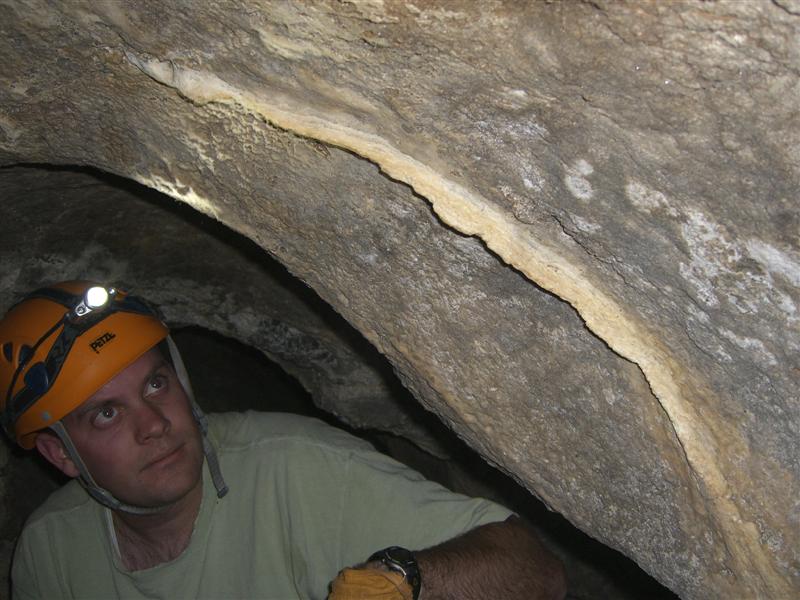
As we attempted the climb we quickly found that both the red and grey colored limestone were extremely crumbly and unsafe and that we could not place any anchors in the cliff for climbing protection. The white formation around the cave is a brittle calcite spar which also limited our ability to gain entrance to the cave. After some discussion it was determined that it was not worth the risk of a fall and that we would return with an array of pitons to bash into the vertical "crack" up the center of the cave entrance at a later date.

A nice little 'artifact' right where we found it. A .44 Magnum cartridge.


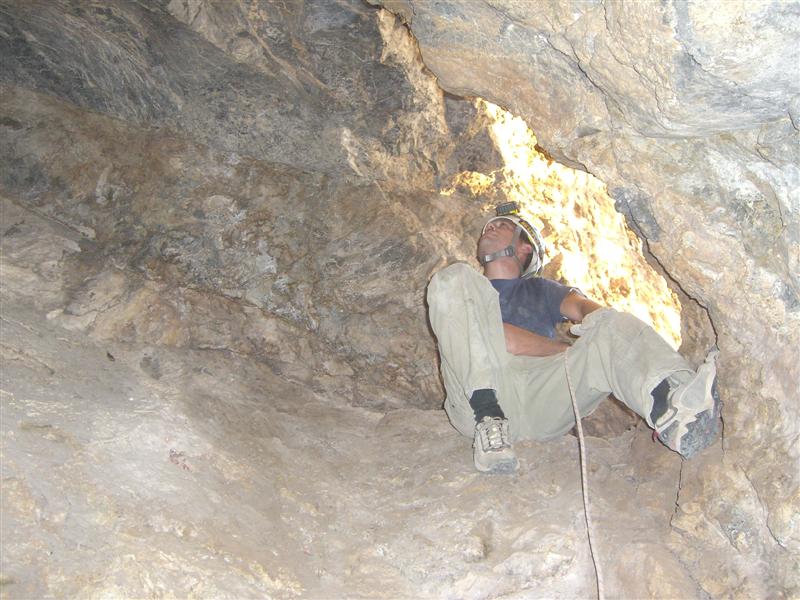
 As Shane successfully reached the entry he made his way towards the back to find that it pinched down to a passage filled with dirt. Although the dirt is very light and easy to dig, it would require a good effort to clean it out.
 At the back of this cave, to my dismay, I found a wire cable with a rusty quick link attached. Unfortunately someone had beaten us here. By the rusty condition of the quick link it looked like they had beaten us by more than a few years. It did, however, make for a quick and easy rappel point. I added my own new quick link, tested the anchor and began my descent, pulling the pitons as I went. I was unable to retrieve one lost arrow piton which, along with the new link I left behind, leaves our mark for the next indivuduals who too decide that they have to know where this cave goes. (Shane)

 Although this cave did not go a far as we were hoping this had to be done. We had to see it for ourselves. It made for a most excellent adventure and that's what it's about anyway.

When we came around the corner my first word was "Wow"!


Zimmie (Judd) making progress but still a lot further to go.
As we attempted the climb we quickly found that both the red and grey colored limestone were extremely crumbly and unsafe and that we could not place any anchors in the cliff for climbing protection. The white formation around the cave is a brittle calcite spar which also limited our ability to gain entrance to the cave. After some discussion it was determined that it was not worth the risk of a fall and that we would return with an array of pitons to bash into the vertical "crack" up the center of the cave entrance at a later date.

A nice little 'artifact' right where we found it. A .44 Magnum cartridge.

This descent from the cave was the most difficult part. Never stable footing which made for a very tiring exit.

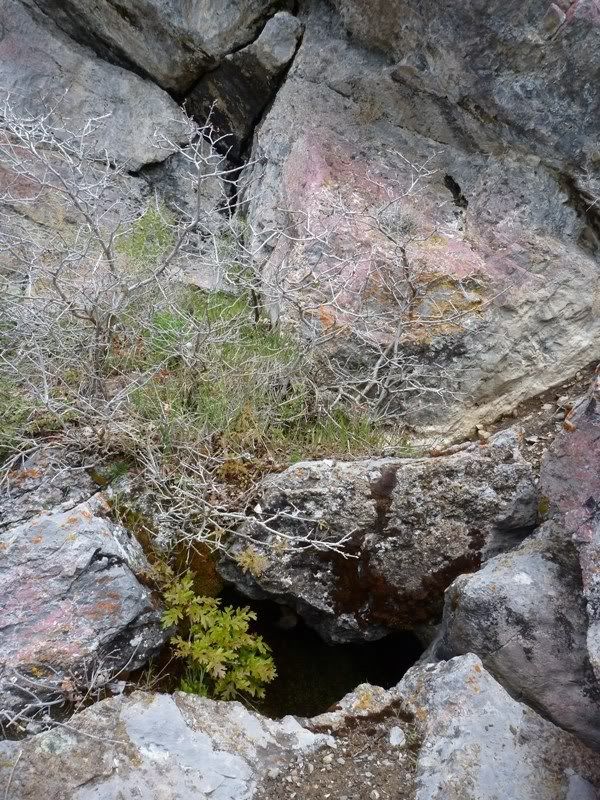
Just down the canyon there are several other smaller but similar cave formations that still require investigation.
Continued....
We finally made it back up to explore this cave. Shane lead the climb into the cave by hammering pitons in the crack and made his way up and into the large hole. This took some time as the piton placement into the brittle rock was less than favorable. The belay was situated well away from the opening as we knew there would be considerable rockfall. However, many of the falling rocks seemed to head straight toward Spencer anyway as he belayed.

We finally made it back up to explore this cave. Shane lead the climb into the cave by hammering pitons in the crack and made his way up and into the large hole. This took some time as the piton placement into the brittle rock was less than favorable. The belay was situated well away from the opening as we knew there would be considerable rockfall. However, many of the falling rocks seemed to head straight toward Spencer anyway as he belayed.
 As Shane successfully reached the entry he made his way towards the back to find that it pinched down to a passage filled with dirt. Although the dirt is very light and easy to dig, it would require a good effort to clean it out.At the back of this cave, to my dismay, I found a wire cable with a rusty quick link attached. Unfortunately someone had beaten us here. By the rusty condition of the quick link it looked like they had beaten us by more than a few years. It did, however, make for a quick and easy rappel point. I added my own new quick link, tested the anchor and began my descent, pulling the pitons as I went. I was unable to retrieve one lost arrow piton which, along with the new link I left behind, leaves our mark for the next indivuduals who too decide that they have to know where this cave goes. (Shane)Although this cave did not go a far as we were hoping this had to be done. We had to see it for ourselves. It made for a most excellent adventure and that's what it's about anyway.
 As a side note, the .44 mag round that I found in the cliff on our last trip I found it again. Only this time it was in the rock slide at the base of the cliff. It seems that the only way that it could have come out of it's place was for it to be removed by someone. I picked up the round and placed it back in it's home. (Shane)


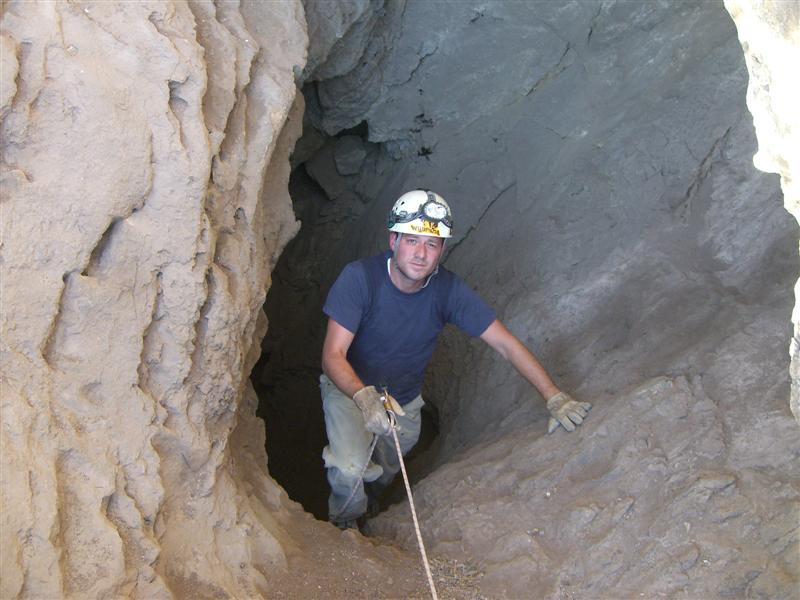
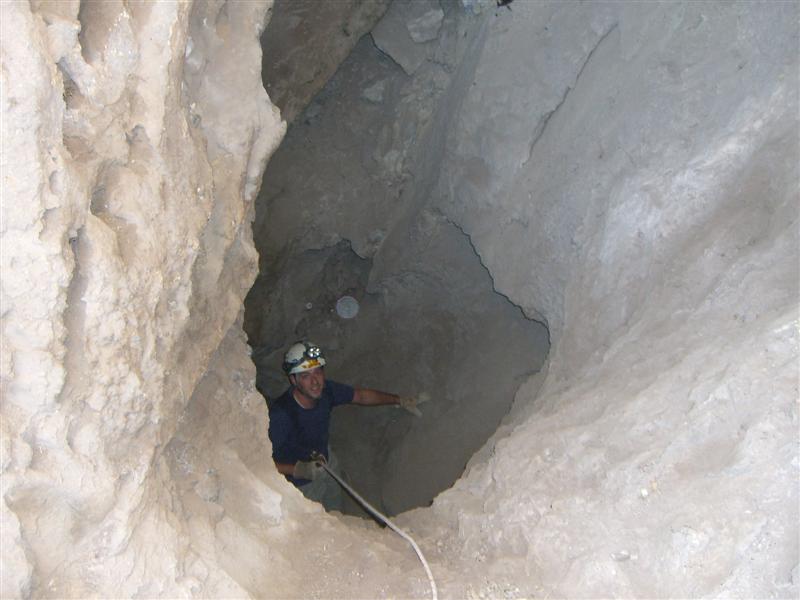
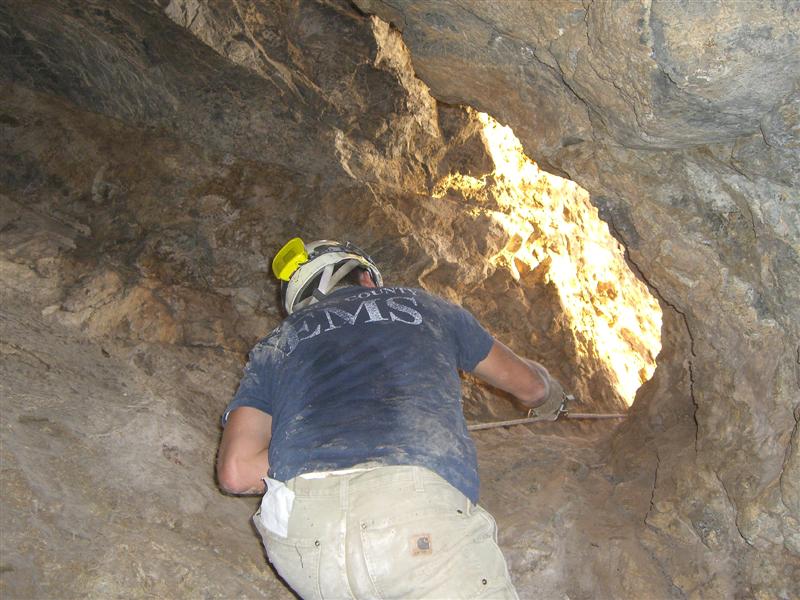
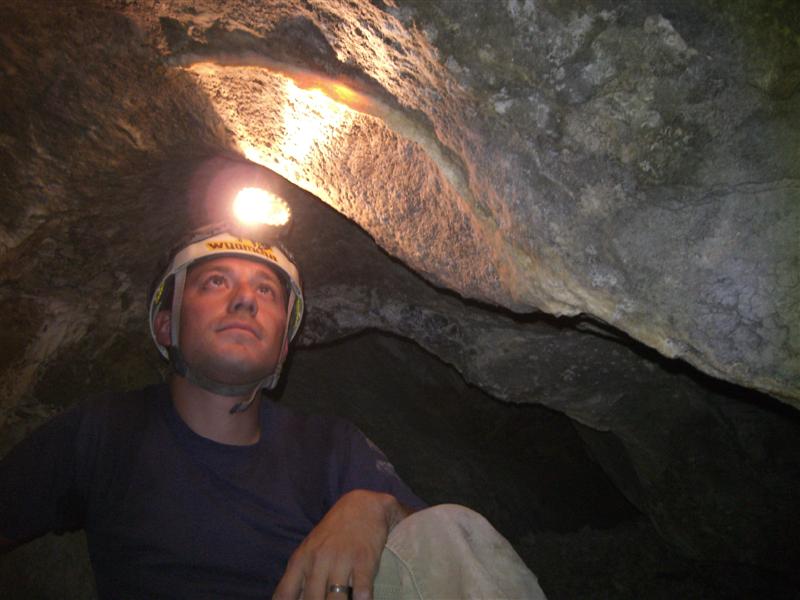




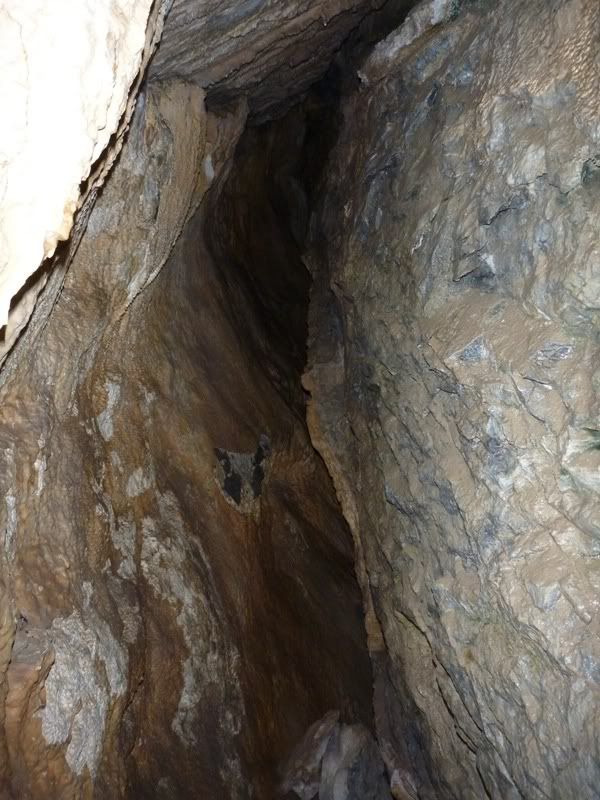


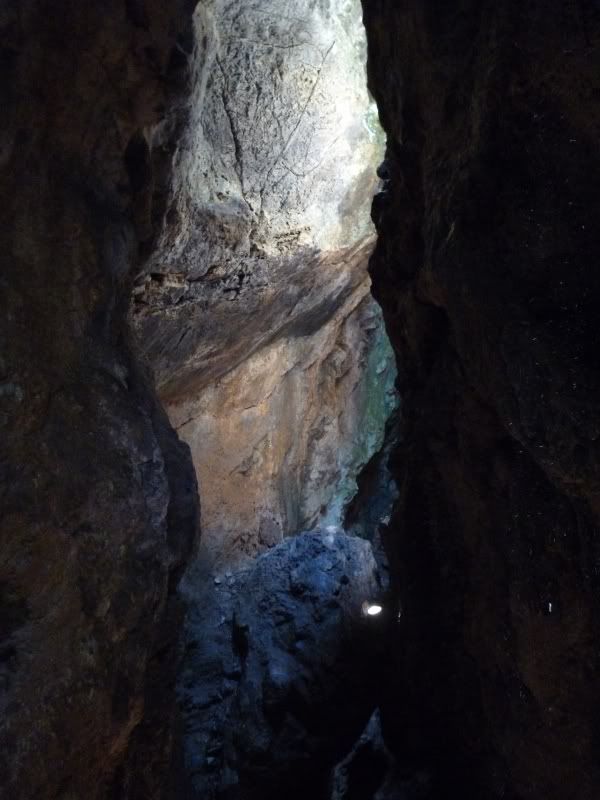
 Spencer ascending out.


 This room is covered with signatures on just about every wall, boulder and ceiling.


