Money Pit

Money Pit gets it's name from the legends of lost Spanish gold in the area; although there is no mineralization or any history of Spanish mining in this cave, there have been recent workings of people trying to excavate here and there.

 The entrance drops 10-12 feet into a small room.
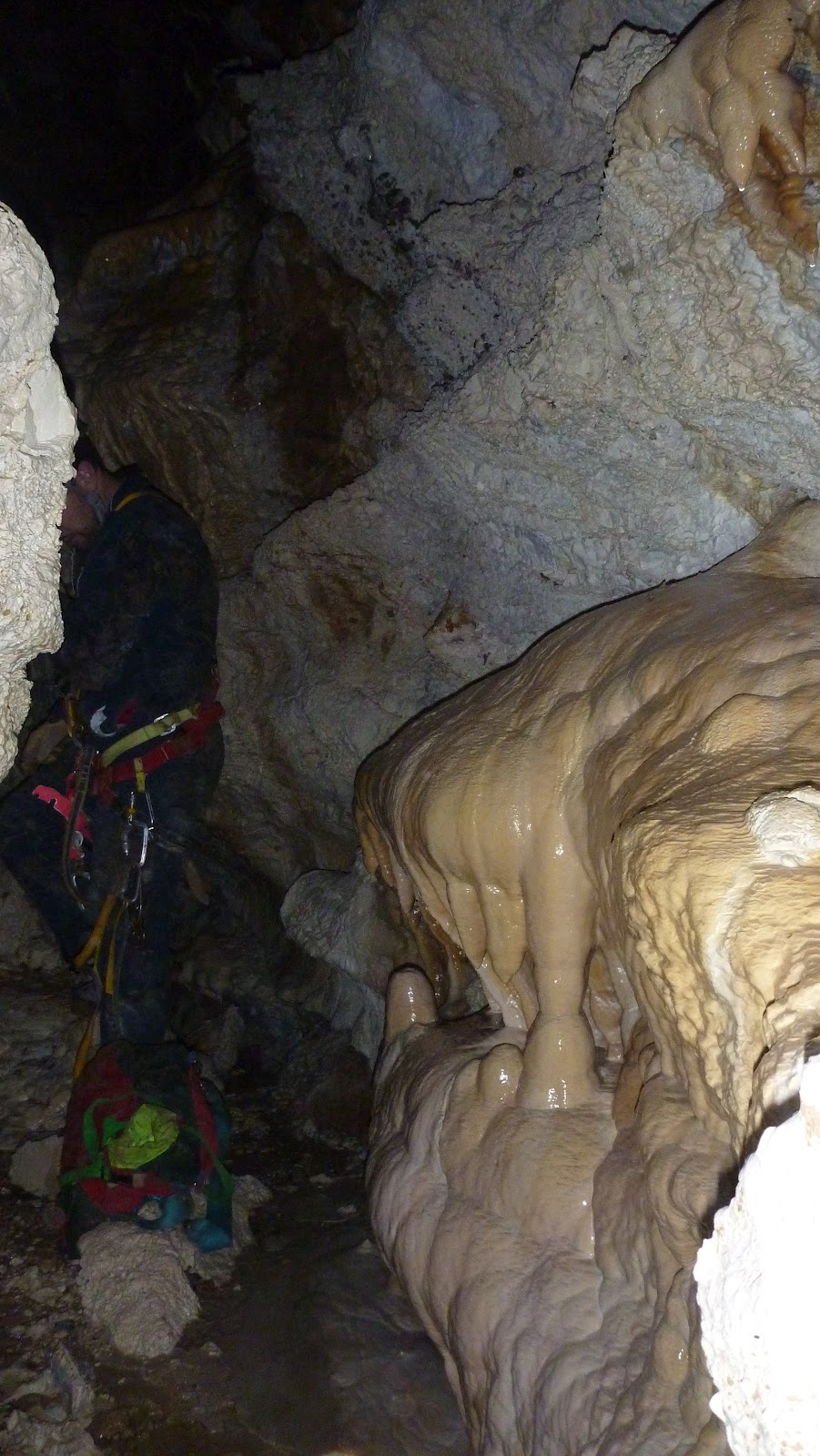
 Shane Coles climbing down into the entry. For inexperienced climbers we recommend using a rope to descend this pit.
 From the small room at the bottom of the entry pit there is a small hole that corkscrews down into the fissure before it opens up.
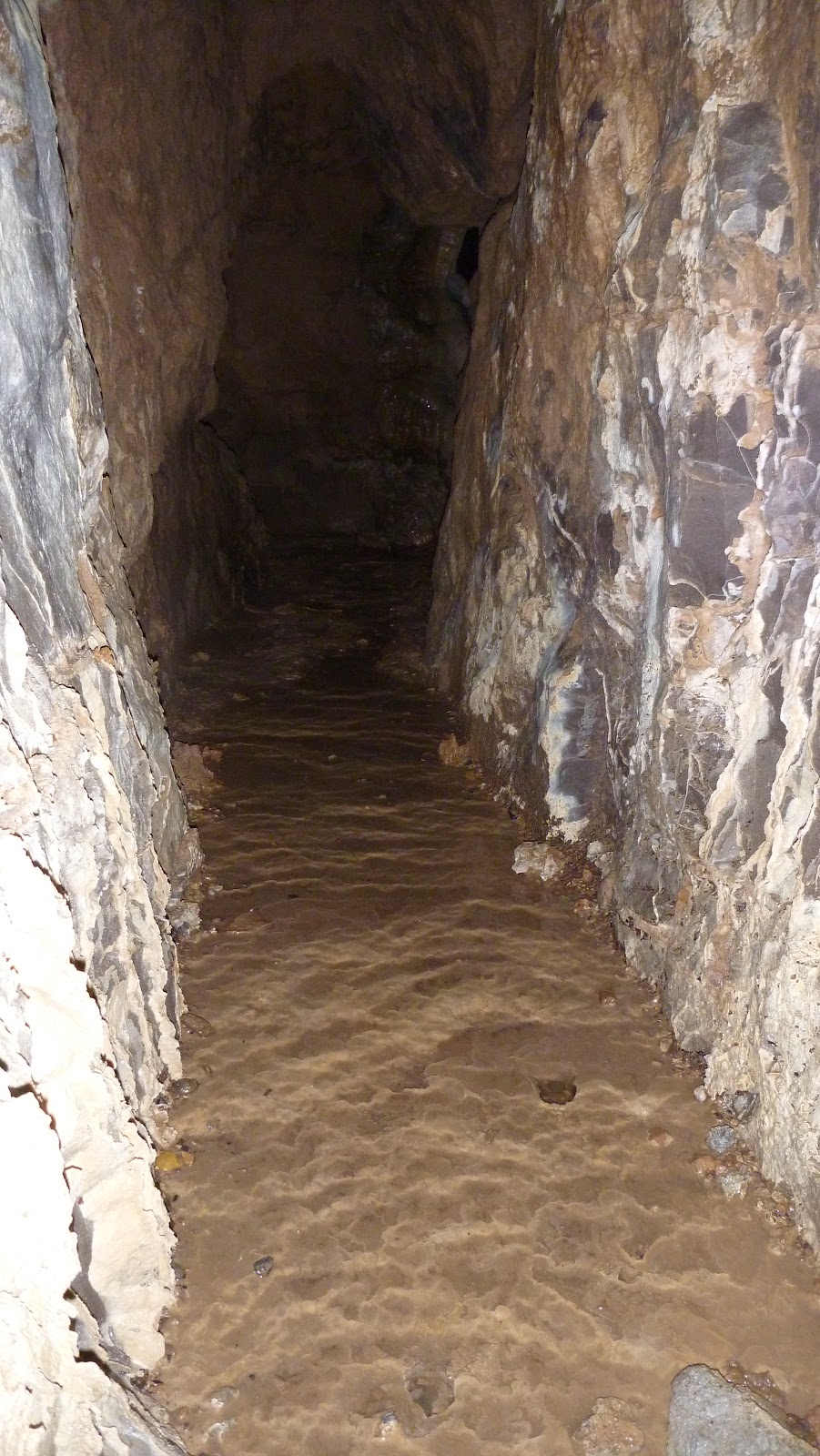
This is looking down the fissure just after the corkscrew passage.
 Descending into the main portion of the cave there is an old rope ladder with wood rungs. The walls are very wet and the rope and wood have become very water logged, so I don't know how much longer this set up will be stable enough to use.
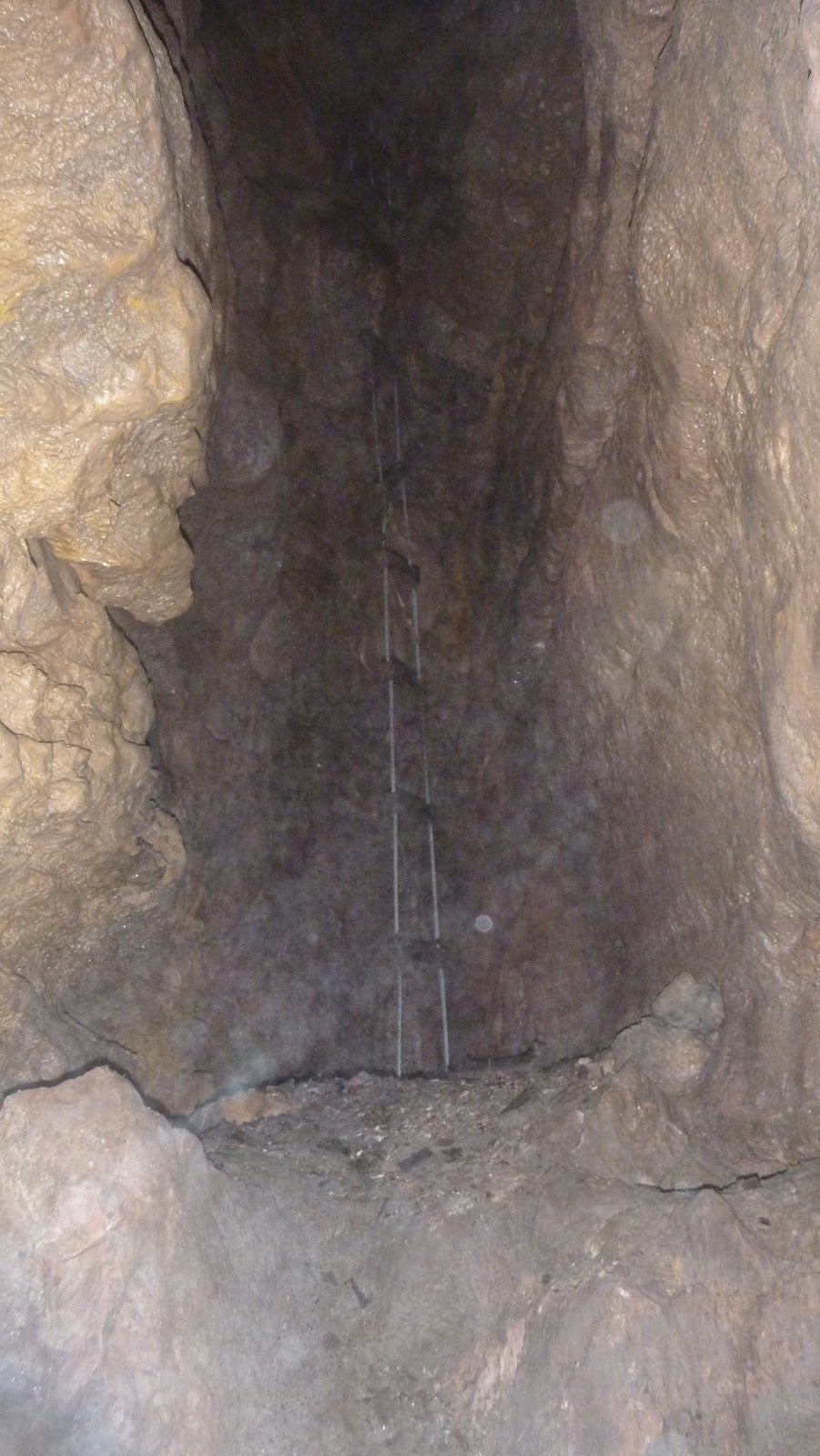
 From the floor of the pit the cave cuts back under where the ladder is and there is another pit.  Since I didn't bring my gear down this one I was not able to explore it any further. Down-climbing this one is probably possible, but since no one else was in there with me I decided not to attempt it. We will have to try it again on another trip.
READMORE
 

Hatari Cave

Hatari is the largest of the caves in the Soapstone Basin area. It has well over 500 feet of passage, with potential for more. The entry pit is roughly 25 feet and then there is a second drop into the main passage which is 50 - 60 feet. The rest of the cave is a large "slot canyon" that intercepts a second canyon. The second channel wraps back around and connects to the original one to make a big loop. Both canyons end in a gravel sump that takes the water down deeper into the limestone.

Looking down the 60' drop.
Looking up the 60' drop.
This is the beginning of the canyon at the bottom of the drop.
This cave has a lot of small pockets that bring water and other minerals into the cave and make these beautiful formations. 
This rock type of rock is called Breccia and is fond in many parts of the cave. 
This poor animal somehow made it to the bottom of the pit alive and wandered to this point where he laid down and has been ever since.  It looks like a small coyote.
The bacon in this cave is very white in most places.


This is called a Soda Straw
More soda straws and serrated bacon.
Some parts of the channel are tighter than others, but this is about the worst of it.
 Here are a couple of little rim rock pools.
This is the only column we found in the cave.


 Shane Coles and David Herron working their way through the loop canyon.
  
 This looks like it is flowing muddy water; but it is actually a solid formation. We stepped on the rocks and edges to avoid any damage.
Looking up and out. 

READMORE
 

Muddy Bones Fissure

This cave is simply an open fissure.  It drops 125' to the first floor and then reaches 146' deep through a side passage. There was really only one small part of this cave that had any formations and they were minimal at best. Most of the walls are covered with mud that flows in during rain storms and spring thaw. We took the time to survey the cave while we were there, so a map will be coming shortly.

 Looking down into the entry.

  Looking back up at the entry from about 40' down.
Someone attempted to do some mining in here a long time ago.  In a well hidden side passage we found these old spikes. They are very rusted and brittle. There were also several cut boards that were almost completely corroded.  They broke very easily when stepped on.
 This is looking down the fissure where some mining was done.
 Judd ascending past the log pile at 125' down.

 The floor was covered in small rodent bones, as were many of the mud coated walls. 
The very bottom of the cave is just a few feet below the bottom of the picture.  The deepest point was 146', at which point the fissure is filled with mud. 

READMORE
 

12 Mile Cave

While exploring the west desert we stumbled upon this cave entrance.  From below it looked like it had a good possibility of going, but unfortunately it was not as promising as it looked. Just inside the cave splits into two passages. Both of which dead end only 6 - 8 ft. back and are filled with pack rat nests.


 The center passage.
The left passage.

READMORE
 

Perfect Arch

The entrance to Perfect Arch is actually an old mine. The mine itself is fairly extensive and there is a dangerous drop near the back that should be avoided. A few hundred feet back from the entrance is where the natural cave was encountered.
This is the main room. Not very big, but beautifully decorated with gypsum crystals.
This is the largest stalagmite and the only column we found in this cave.
One portion of the cave is covered in these yellowish mamalaries.
Many of the stalagmites have been broken off and are missing in this cave.
                       
After the main room an arched tunnel system begins that is covered with white gypsum crystals. Great care should be taken when crawling through these passages.  You can see that a lot of dirt is ending up on the walls from previous visitors.
This is looking down one of the passages. While climbing down it my brother suddenly yells "skunk!" I don't think I have seen everyone freeze that fast in a long time. And I didn't know that skunks lived inside of caves until now. So be careful if you visit this one!
These gypsum hairs are extremely delicate formations. Please do not touch or even breathe on these.

READMORE